The Darkest Room

You cannot not see it when you walk past it in the corridor. An ominous image, a catchy name, a room featuring the darkest walls on campus, all painted black: you’ve encountered Studio Dark Tech. In this space, IT students, teachers, and researchers explore the shadiest sides of technology.
Tinker lab
At the infancy of the project was a vision from Jolijn Friederichs and Marise van Noordenne, which they called a “Tinker Lab.”
With the help of a Creative Innovation grant (COECI), an internal program stimulating the realisation of innovative ideas, they managed to turn this concept into a physical space on the campus of the Amsterdam University of Applied Sciences.
The lab addresses a recurring problem: with new technologies, ethics often come as an afterthought, if not as an outright burden. It has become “one more thing to think about,” or worse, an extra layer of bureaucracy.
Maybe you want to do the right thing but you don’t know what “right” means anymore. Or maybe you feel like the old principles are no longer valid. Or conversely, that old principles still hold ground but that the changing landscape makes it harder to know how to apply them.
More often than not, integrating ethics is not so much a problem of intention as it is a problem of method. This is where the Tinker Lab comes in.
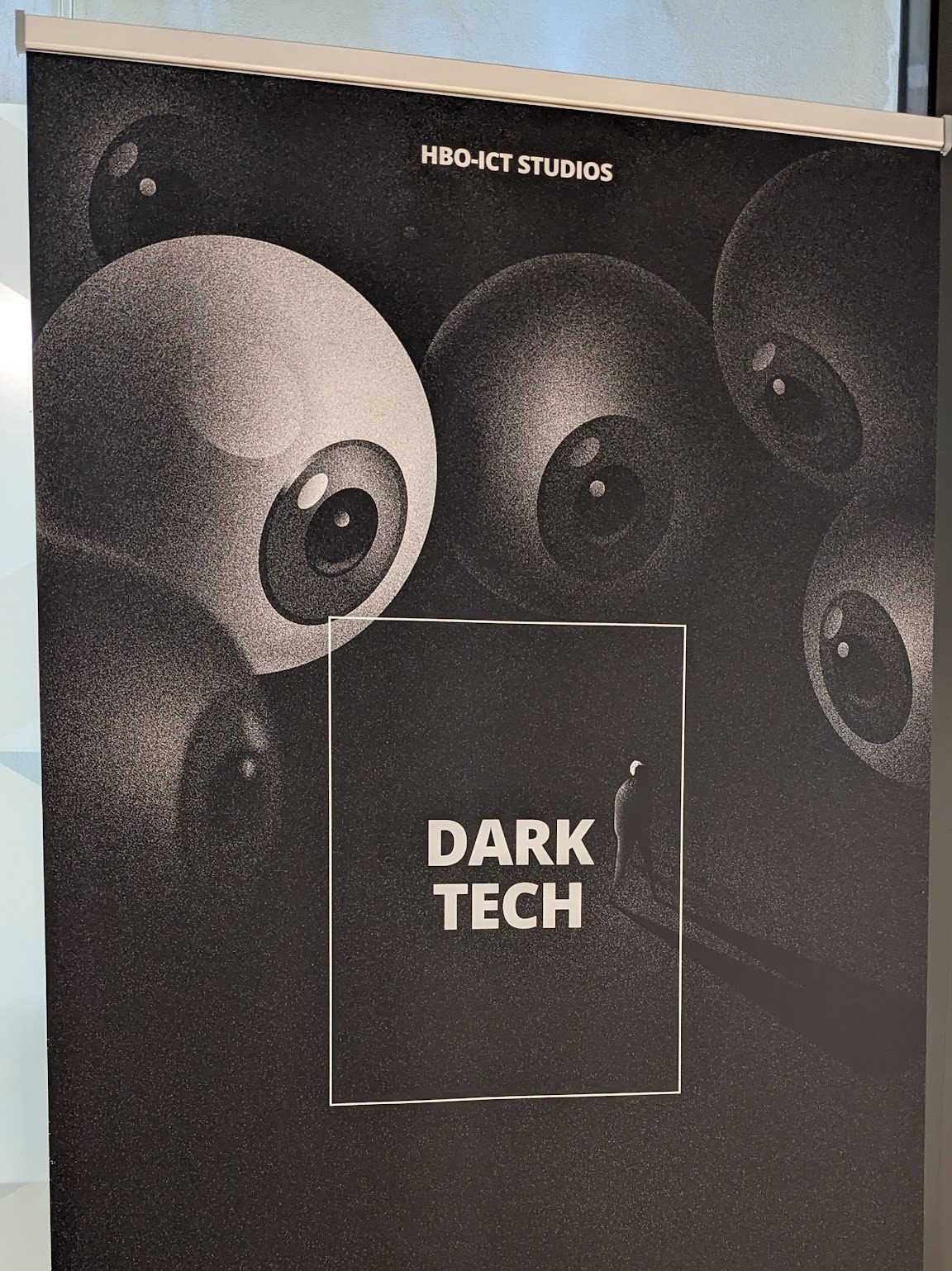
Reclaiming an unloved space
As the project started to take shape, it went looking for a place to become Studio Dark Tech.
On the IT-education floor, there happened to be a meeting room that nobody liked. It had little natural light. It was used as storage for a while, until a facility shortage turned it into a meeting room. Despite some attempts to improve it, it remained a gloomy place. The fresh pastel paint didn’t brighten the mood. The new modern table didn’t succeed at facilitating conversation. The room was a functional space that staff and students didn’t visit gladly.
As it turned out, improvements failed because the room couldn’t be made brighter. To fulfil its true purpose, it had to become… darker.
One day, Jolijn and Marise came with housepainters and covered it with blackboard-textured paint, the kind of paint that allows people to write on the wall with chalk. They brought in new tables and chairs in matching colours, as well as the giant green lamp, a second-hand purchase that became a symbol of the Dark Tech method: a playful way to shine a light in dark places.

Provocatypes
The founders of Dark Tech expand on a method of speculative design and critical making called “provocatypes,” a set of thought-provoking experiments. Quite simply, the idea is to imagine the most exploitative, unethical version of what a product could look like.
They created a set of cards, The Speculation Game, to get the creative juices flowing:

But it’s not enough to imagine it; you have to build the actual products to test what they would look like in real life. This is the value of a Tinker Lab: to make things as tangible as possible. Tinkering with cardboard and scrap materials, doodling, in short, building physical products, allows for a process known as “embodied criticality,” which means literally experiencing ethical dilemmas in your body.

Design what you fear
The creation act of the studio itself had a thrill of the forbidden. Black walls? Non-standard furniture? Was it even… allowed? From the beginning, Dark Tech is the kind of project that can’t ask too strongly for permission, lest it becomes buried in rules, validation lines, and everybody’s worries. What it needed was a vision, something that Marise and Jolijn acted upon with enough confidence that the studio made its way to where it was supposed to be.
Once set in motion, the Dark Tech method demonstrably allowed students to feel more confident in speaking up about ethical dilemmas. They felt better equipped to deal with complex situations and loaded subjects in the workplace.
“What happens when we design the systems we fear?”
– Jolijn Friederichs
By asking this question, Studio Dark Tech takes us out of our concerns and doom-scrolling, out of the purity-patterns of being a “perfectly ethical person,” out of the feeling of powerlessness that grips us when we are passively watching a world that unfolds out of control.
Tinkering with provocatypes creates a change of attitude. It reveals the inherent playfulness of the mind, which unlocks only when we find the courage to look at the truth. Jolijn and Marise demonstrated it first with the act of creating the studio: if you’re scared of it, first dare to make it.
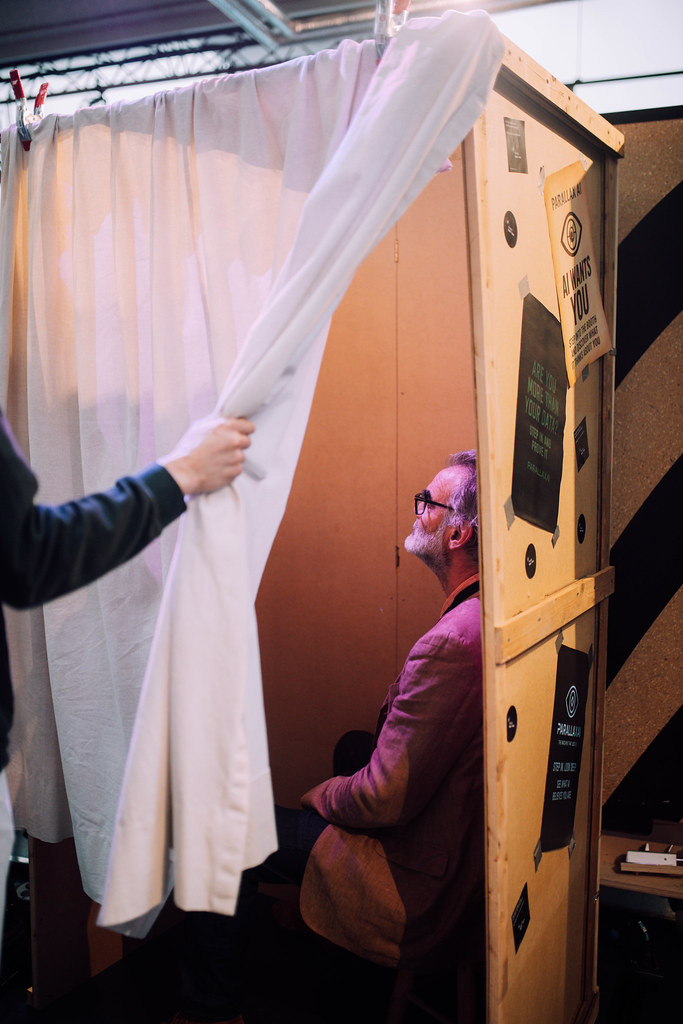
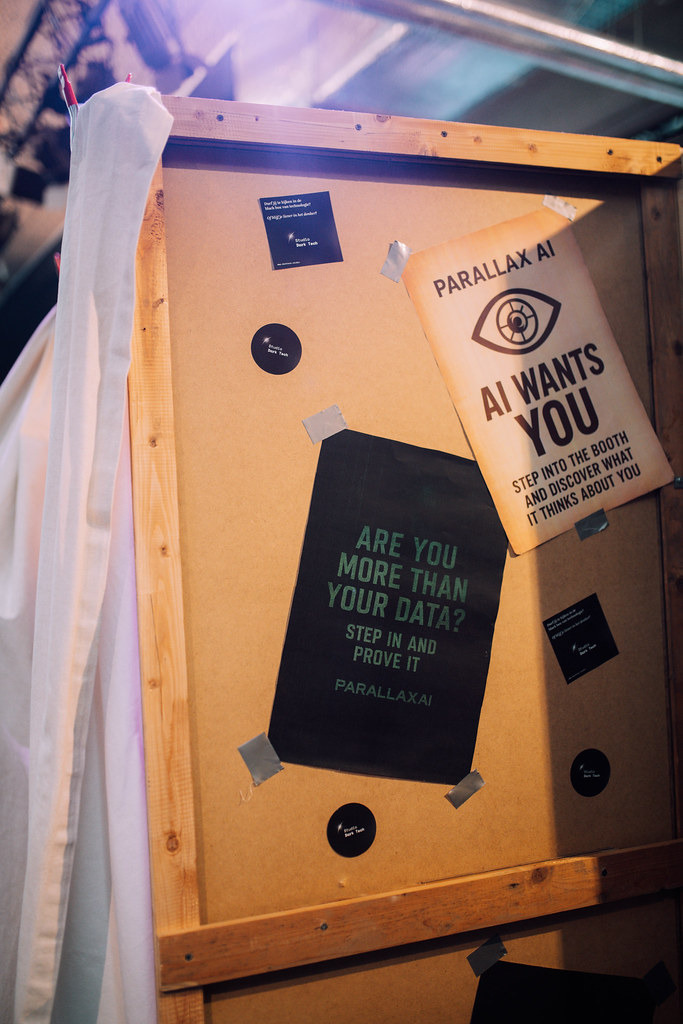
Note: All views expressed in this blog are my own and do not necessarily reflect the policy of the Amsterdam University of Applied Sciences.